Glue, Torx, and the Illusion of Choice: How Laptop Design Quietly Decides Your Next Purchase
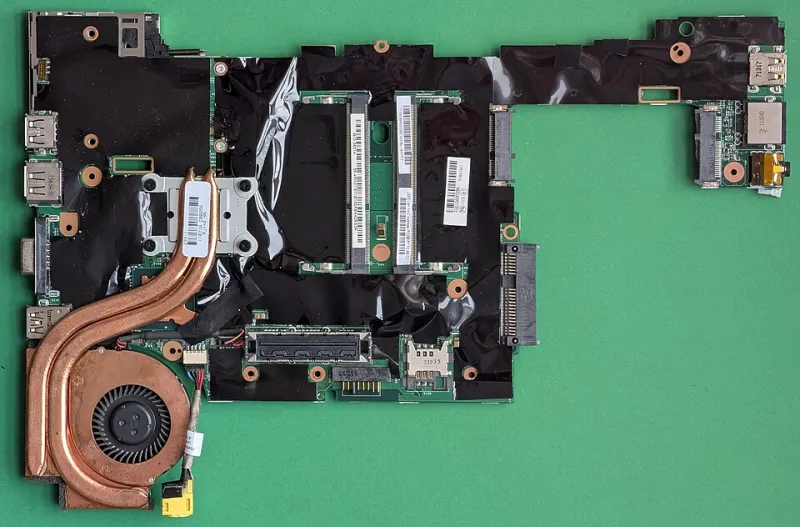
Photo: Siarhei Besarab, CC BY-SA 4.0, via Wikimedia Commons
There is a moment familiar to every repair technician: the moment you lift the bottom cover of a modern laptop and find not screws, but a sheet of glued plastic, a battery anchored with adhesive strips, and memory chips soldered directly to the board. Nothing about that design was inevitable. It was chosen. And the choice was made for the manufacturer's benefit, not yours.
The Anatomy of an Unrepairable Machine
Three design trends dominate the last decade of consumer laptops, and each one pushes the owner toward replacement rather than repair:
- Soldered RAM and storage. When memory is baked onto the motherboard, the single cheapest and easiest upgrade in computing history disappears. A machine that could have grown with your needs for six years is frozen at the spec sheet it shipped with.
- Adhesive-secured batteries. Batteries are consumables — they degrade whether you use them or not. Gluing them in turns a $60, fifteen-minute replacement into a risky, sometimes impossible procedure that can crack the chassis.
- Proprietary fasteners and paired parts. Non-standard screws and parts serialized to the motherboard ensure that only authorized (and expensive) channels can perform repairs.
The engineering excuse is thinness, and it is not entirely false. But machines like the Framework Laptop and classic ThinkPads prove that thin, light, and repairable can coexist. The glue is frequently a margin decision disguised as an industrial-design one.
The Quiet Cost Shifting
The effect is a slow transfer of cost from manufacturer to consumer — and, increasingly, to the environment. Americans discard hundreds of millions of pounds of electronics annually, much of it functional except for a single glued-in component. For small businesses managing fleets of laptops, unrepairable design converts a manageable hardware budget into a forced-refresh treadmill.
The Counterweight: Right to Repair
Legislatures across the United States have begun pushing back. New York's Digital Fair Repair Act, along with similar measures advanced in states like Minnesota, California, and Oregon, requires manufacturers to make parts, tools, and documentation available to independent repair shops and owners. The momentum is real, and manufacturers are responding — some now publish repair manuals and sell genuine parts that they would not have offered five years ago.
Repairability as a Buying Criterion
Until regulation catches up fully, the market has to do the work. Before purchasing a laptop for yourself or your organization, check the following:
- Can RAM and storage be upgraded? Look for SODIMM slots and a removable M.2 drive.
- Is the battery serviceable without removing the motherboard?
- Does the manufacturer publish repair manuals and sell parts?
- What does iFixit's teardown score say? Independent repairability ratings exist for most major models.
A laptop is not a sealed appliance; it is a tool with a serviceable life of five to eight years — if it is allowed to be. Buying repairable machines, and supporting the legislation that keeps them that way, is not nostalgia. It is the difference between owning your hardware and merely renting it until the glue gives out.